Can Christians Practice Nature Spirituality?
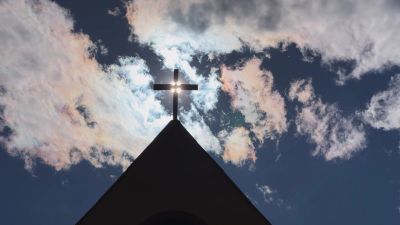
Yes, Christians can practice nature spirituality, provided the natural world is approached in a way that remains consistent with their understanding of God, creation, worship, and Christian faith.
Many Christians experience a profound sense of God’s presence while walking through a forest, sitting beside water, tending a garden, observing wildlife, or looking into the night sky. They do not necessarily believe that nature replaces God. Instead, they understand the natural world as creation: a living expression of divine wisdom, beauty, generosity, and order.
For these Christians, attention to nature can become a form of prayer, contemplation, gratitude, and stewardship.
Other Christians are cautious about the term nature spirituality. They may worry that it implies worshipping the Earth, placing creation above the Creator, adopting Pagan beliefs, or treating nature as divine.
Those concerns deserve an honest response.
Nature spirituality is a broad term. It can refer to very different beliefs. Some expressions fit comfortably within Christianity. Others make theological claims that traditional Christian churches would reject.
The important question is therefore not simply:
Can Christians practice nature spirituality?
A more useful question is:
What kind of nature spirituality is being practiced, and how does it understand God, creation, humanity, and worship?
Nature Has Always Been Part of Christian Spirituality
Nature-centered spiritual experience is not foreign to Christianity.
The Bible repeatedly uses the natural world to reveal spiritual truth. Mountains, gardens, deserts, rivers, seeds, vineyards, storms, animals, trees, soil, bread, water, light, and changing seasons appear throughout biblical teaching.
The natural world is not presented merely as scenery. It is woven into the biblical understanding of creation, human responsibility, divine revelation, judgment, renewal, and hope.
The opening chapters of Genesis describe the world as intentionally created and repeatedly declared good. Human beings are formed from the ground and placed within a garden with the responsibility to cultivate and protect it.
The Psalms describe the heavens, Earth, seas, animals, weather, and landscapes as participating in the praise of God.
The prophets use damaged land, failed harvests, flowing rivers, restored gardens, and renewed wilderness to describe both judgment and healing.
Jesus frequently taught through nature. He spoke of seeds, soil, lilies, birds, trees, vines, sheep, weather, water, and harvests. He also withdrew to mountains, gardens, wilderness, and quiet places for prayer.
Christian nature spirituality is therefore not an attempt to add nature to a religion that previously ignored it. It is often an attempt to recover something that has always been present within the tradition.
Creation Can Reveal God Without Becoming God
One of the central Christian distinctions is the difference between the Creator and creation.
Most forms of Christianity teach that the natural world was created by God and can reveal something about God, but is not identical to God.
Psalm 19 describes the heavens as declaring God’s glory.
Romans 1:20 teaches that aspects of God’s nature may be perceived through what has been made.
Jesus encouraged people to observe birds, flowers, seeds, weather, and agricultural life as sources of spiritual understanding.
From this perspective, nature can point beyond itself.
A Christian may stand beneath an ancient tree and experience awe without worshipping the tree. The tree may awaken gratitude toward God, remind the person of life’s dependence, or reveal something about patience, endurance, and generosity.
A Christian may look at the stars and feel spiritually overwhelmed without believing that the stars themselves are deities.
This is similar to how sacred music, art, architecture, or human love may direct a person’s attention toward God. The created thing is meaningful, but it is not necessarily treated as the ultimate source of sacred reality.
What Is Christian Nature Spirituality?
Christian nature spirituality is an approach to faith that gives serious attention to God’s relationship with creation and humanity’s responsibilities within it.
It may include:
- Experiencing nature as God’s creation
- Praying or worshipping outdoors
- Practicing gratitude for the sources of life
- Caring for land, water, plants, and animals
- Reflecting on biblical teachings through natural imagery
- Recognizing human dependence upon the Earth
- Understanding ecological stewardship as a Christian responsibility
- Seeking solitude and contemplation in natural settings
- Grieving environmental destruction
- Working toward ecological healing and restoration
Christian nature spirituality does not require the belief that nature is perfect, harmless, or untouched by suffering.
Christian theology has long wrestled with a world containing beauty and violence, abundance and scarcity, birth and death. Nature can inspire wonder, but it also confronts people with vulnerability, decay, disaster, and mortality.
A mature Christian nature spirituality makes room for both realities.
The Biblical Meaning of Stewardship
Christian teaching about nature is often summarized through the word stewardship.
A steward is not the absolute owner of what has been entrusted to them. A steward carries responsibility for its care.
Genesis 2:15 describes the human being as placed within the garden to cultivate and keep it. The language suggests both productive work and protective responsibility.
Other biblical teachings place limits on human use of the land. The Sabbath principle includes rest not only for people but also for animals and agricultural life. The laws of ancient Israel included provisions concerning harvest, soil, animals, and access to food for vulnerable people.
These passages arose in an ancient agricultural society and cannot simply be transferred into modern environmental policy without interpretation. Nevertheless, they reveal an important religious principle:
Human authority over the Earth is not unlimited.
Biblical dominion does not need to mean careless domination.
Within Christian stewardship, land, water, animals, and ecosystems are not valuable only because they can be converted into wealth. They belong ultimately to God and should be treated with humility and restraint.
Environmental care can therefore be understood as an act of faithfulness rather than merely a political preference.
Jesus and the Natural World
Jesus lived and taught in close relationship with the landscapes of Galilee and Judea.
His teachings drew repeatedly from the natural world:
- Seeds falling on different soils
- Mustard plants
- Wheat and weeds
- Fig trees
- Grapevines
- Sheep and shepherds
- Birds nesting
- Flowers growing
- Fish and fishing
- Rain, wind, and storms
- Water and thirst
- Bread and harvest
These were not decorative illustrations. Jesus used familiar ecological and agricultural relationships to communicate ideas about trust, growth, judgment, patience, spiritual perception, and the kingdom of God.
Jesus also sought solitude outdoors.
The Gospels describe him withdrawing into wilderness, mountains, gardens, and other quiet places to pray. His spiritual life was not confined to synagogues, houses, or formal religious spaces.
For Christians today, this suggests that a church building is not the only place where prayer, reflection, or encounter with God can occur.
The forest, shore, garden, and open field can also become places of attention.
Does Practicing Nature Spirituality Mean Worshipping Nature?
Not necessarily.
A Christian may honor, appreciate, study, and protect nature without worshipping it.
The distinction depends partly on what a person means by worship.
Within traditional Christianity, worship belongs to God. Creation may be loved and respected, but it should not become a replacement for God.
A Christian nature practice might say:
I experience God through the beauty and complexity of creation.
That is different from saying:
The natural world is the only God that exists.
Some nature-centered traditions understand divinity as present within all things. Others describe the Earth itself as sacred or divine. These perspectives may resemble pantheism or panentheism, depending on how they are defined.
Traditional Christian churches may disagree with those interpretations.
Christians exploring nature spirituality should therefore ask what a particular teacher, book, community, or practice means when it uses words such as:
- Sacred
- Divine
- Spirit
- Earth
- Mother Nature
- Consciousness
- The universe
- The Web
The same word can carry very different meanings.
Pantheism, Panentheism, and Christianity
Questions about nature spirituality sometimes involve two unfamiliar terms: pantheism and panentheism.
Pantheism
Pantheism generally identifies God with the universe or the totality of nature.
In its simplest form:
God and the natural universe are the same reality.
Most traditional Christian denominations reject pantheism because Christianity generally distinguishes God from creation.
Panentheism
Panentheism teaches that the universe exists within God, while God is also greater than the universe.
In its simplest form:
Everything exists within God, but God is more than everything that exists.
Some Christian theologians have explored ideas resembling panentheism, especially when discussing God’s presence throughout creation. Others believe the concept weakens the distinction between Creator and creation.
Christians do not all agree about how divine presence should be understood.
A person does not need to adopt either pantheism or panentheism to practice Christian nature spirituality. They may simply believe that God is present and active within creation while remaining distinct from it.
Is Nature Spirituality Pagan?
Nature spirituality is not automatically Pagan.
Pagan religions often place strong emphasis on the Earth, natural cycles, ancestors, spirits, or multiple deities. Some Pagan practices may look similar to Christian nature practices from the outside.
Both groups may:
- Gather outdoors
- Observe seasonal changes
- Light candles
- Use plants symbolically
- Express gratitude for the Earth
- Hold ceremonies connected with natural cycles
Similar actions do not necessarily mean identical beliefs.
A Christian may observe the changing seasons as part of God’s creation. A Pagan may understand those same seasons through particular deities, myths, or sacred forces.
The meaning of a practice depends on the theology surrounding it.
Christians should avoid treating Paganism as a careless label for everything outside
conventional church life. Paganism includes real religious traditions with their own beliefs and identities.
At the same time, Christians should feel free to ask whether a particular practice aligns with their convictions.
Respect does not require pretending that all religions teach the same thing.
Can Nature Become an Idol?
From a Christian perspective, anything can become an idol when it takes the place of God or receives the ultimate devotion that belongs to God.
Money, nationalism, political power, religious institutions, success, family, personal identity, and even the Bible itself can be approached in idolatrous ways when they are used as substitutes for a living relationship with God.
Nature can also be romanticized or treated as ultimate.
Christians practicing nature spirituality should guard against several tendencies:
- Treating nature as morally perfect
- Assuming every natural impulse is spiritually good
- Believing that whatever feels natural must be right
- Seeking spiritual experiences while ignoring ethical responsibility
- Valuing landscapes and animals while showing little compassion for people
- Using nature as an escape from community and accountability
- Replacing thoughtful faith with vague spiritual language
The answer is not to become indifferent toward nature.
The answer is to place reverence within a coherent spiritual and ethical framework.
Human Beings Are Part of Creation
Christian discussions sometimes speak as though humanity and nature are two separate categories.
There are humans, and then there is nature.
Biblically, that distinction is not complete.
In Genesis, the human being is formed from the ground. The Hebrew words for human and soil are closely connected. Human life depends upon breath, water, food, land, animals, plants, seasons, and community.
Christianity may affirm a distinctive spiritual role for humanity, but this does not eliminate humanity’s biological and ecological belonging.
Human beings remain creatures.
We breathe because plants and living systems continually renew the atmosphere.
We eat because soil, water, sunlight, microorganisms, plants, animals, farmers, and countless relationships make food possible.
We live within watersheds, climates, habitats, and communities of life whether or not we pay attention to them.
Christian humility begins with remembering that being made in the image of God does not make humanity independent of creation.
Authority should lead toward responsibility, not arrogance.
Creation Care Is Also Care for People
Environmental responsibility is not separate from love of neighbor.
Polluted water, damaged soil, extreme heat, toxic waste, flooding, poor air quality, and habitat destruction affect human communities. These harms often fall most heavily upon people with the fewest resources.
When Christians care for the Earth, they are also caring for:
- Children
- Future generations
- Farmers
- Coastal communities
- People with health vulnerabilities
- Communities affected by pollution
- Families dependent upon clean water
- People whose homes and livelihoods are threatened by ecological damage
Christian creation care should not value forests while ignoring human suffering.
It should not value people while treating the living systems supporting them as disposable.
Love of God, love of neighbor, and care for creation can strengthen one another.
What About the Teaching That the Earth Will Pass Away?
Some Christians believe environmental care is unimportant because the present world will eventually end or be replaced.
Christian interpretations of the world’s future differ.
Some emphasize destruction and replacement. Others emphasize resurrection, restoration, renewal, or the healing of creation.
Romans 8 describes creation as groaning and awaiting liberation.
The final chapters of Revelation envision a renewed relationship among God, humanity, and creation, including the river of life and the tree of life.
Regardless of one’s interpretation of prophecy, the expectation of a future world does not normally excuse neglect in the present.
Christians who believe in bodily resurrection do not conclude that present bodies should be abused.
Christians who believe in eternal life do not conclude that current human lives lack value.
In the same way, belief in future renewal does not require indifference toward the Earth entrusted to humanity now.
Can Nature Replace Church?
Nature can be a place of prayer, reflection, and encounter with God.
A person may genuinely feel closer to God beside a river than inside a church building.
However, within Christianity, church traditionally means more than a building or weekly service.
Church includes:
- Community
- Teaching
- Shared prayer
- Service
- Ethical accountability
- Communion
- Support during suffering
- Care for neighbors
- Collective worship
- The passing of faith from one generation to another
A forest can offer silence, beauty, and perspective. It does not automatically provide human community, correction, mutual responsibility, or care during illness and grief.
The question is not necessarily whether a Christian must choose between nature and church.
A healthier question may be:
How can Christian community recover a deeper relationship with creation?
Some Christians remain active in conventional churches while developing nature-centered practices. Others participate in outdoor ministries, creation-care groups, retreat communities, or nature churches.
For a fuller discussion of nature-centered spiritual communities, read What Is a Nature Church?
Do Christians Need to Leave Their Existing Church?
No.
Exploring nature spirituality does not automatically require someone to leave their congregation or abandon their Christian identity.
A person may begin by introducing simple creation-centered elements into an existing spiritual life:
- Spending prayer time outdoors
- Studying biblical passages about creation
- Joining a church environmental ministry
- Creating a community garden
- Organizing a park or shoreline cleanup
- Holding an outdoor worship service
- Learning about the local watershed
- Helping the congregation reduce waste
- Supporting people affected by environmental harm
Some churches will welcome these efforts.
Others may be uncertain or resistant, especially if the language of nature spirituality sounds unfamiliar.
Christians can communicate clearly by explaining that their concern arises from gratitude for creation, love of neighbor, humility, and responsible stewardship.
Do All Christian Denominations Agree?
No.
Christianity includes many denominations, theological traditions, and cultural expressions.
Some churches strongly support creation care, ecological theology, outdoor prayer, and environmental advocacy.
Others are cautious about language that describes the Earth as sacred or speaks of divine presence within nature.
Some Christians are comfortable learning from other spiritual traditions. Others believe such engagement creates theological risk.
Catholic, Orthodox, Anglican, Lutheran, Methodist, Reformed, Evangelical, Pentecostal, Anabaptist, Quaker, and independent Christian communities may approach these issues differently. Differences also exist within each group.
There is no single Christian authority who can settle the question for every believer.
Christians exploring nature spirituality should study their tradition, read Scripture thoughtfully, speak with trusted spiritual leaders, and remain honest about areas of agreement and disagreement.
Questions Christians Should Ask
Before participating in a nature-centered practice or community, a Christian may wish to ask:
- How does this practice understand God?
- Is nature viewed as created by God, filled with divine presence, or identical with God?
- Is Jesus welcomed, rejected, reinterpreted, or largely left unaddressed?
- Does the practice require worship of beings or forces I do not believe in?
- Am I being asked to claim beliefs I do not honestly hold?
- Does the community respect different religious backgrounds?
- Are its leaders accountable?
- Does the practice encourage compassion and responsibility?
- Does it strengthen or weaken my commitment to truth?
- Am I treating nature as a path toward God or as a substitute for God?
- Does my spiritual experience lead toward care for people and the Earth?
These questions are not expressions of fear. They are part of responsible spiritual discernment.
Can a Christian Use the Language of Sacred Nature?
Some Christians are comfortable calling nature sacred. Others reserve that word for God or for things specifically dedicated to God.
The disagreement often comes from different meanings of sacred.
When one Christian says the Earth is sacred, they may mean:
The Earth belongs to God and should not be treated carelessly.
Another Christian may hear:
The Earth is a deity that should be worshipped.
Clear language can prevent unnecessary misunderstanding.
Christians might use phrases such as:
- God’s creation
- The living world
- The community of creation
- Creation as a gift
- The goodness of the Earth
- The sacred responsibility of stewardship
- The presence of God revealed through creation
Those who are comfortable using the word sacred should still explain what they mean.
Can Christians Learn From Other Nature-Centered Traditions?
Christians can learn about other religions and cultures, but learning should be approached with respect, discernment, and honesty.
Indigenous, Pagan, Buddhist, Shinto, and other nature-centered traditions may preserve insights about attention, restraint, gratitude, relationship, community, and ecological responsibility.
Christians can listen to these perspectives without claiming that all religions are identical.
They should also avoid removing ceremonies, symbols, or teachings from their cultural and religious contexts merely because those practices seem meaningful or attractive.
Respectful learning asks:
- Where did this teaching come from?
- What does it mean within its original tradition?
- Do I have permission to participate?
- Am I honoring the community or simply taking what interests me?
- How does this compare with my own theology?
- Can I learn from the principle without imitating the ceremony?
Humility allows people to learn from others while remaining honest about their own beliefs.
What About Spiritual Experiences in Nature?
Christians have long reported spiritual experiences in wilderness, gardens, mountains, caves, deserts, forests, and other natural settings.
Such experiences may include:
- A strong sense of God’s presence
- Awe
- Peace
- Conviction
- Gratitude
- Clarity
- A sense of unity or connection
- Emotional healing
- Awareness of personal smallness
- A renewed commitment to faith
Christians interpret spiritual experiences in different ways.
Some understand them as encounters with God.
Others believe they arise through psychological, emotional, or neurological processes.
Some believe both natural and spiritual explanations can be true at the same time.
A powerful experience should not automatically be treated as proof of every interpretation attached to it.
Christian discernment asks whether the experience leads toward love, humility, truth, responsibility, patience, and care.
An experience that produces superiority, recklessness, manipulation, or disregard for others should be approached cautiously, no matter how spiritual it initially felt.
Christians and The Holy Spring
The Holy Spring welcomes people from Christian backgrounds, including those who remain Christian, those who are reconsidering inherited beliefs, and those who no longer identify with conventional Christianity.
We recognize that many people experience the sacred through the natural world and feel that this dimension of spiritual life has been neglected within their previous religious communities.
Our broader spiritual framework is nature-centered and speaks of the Web of life, direct experience, ecological responsibility, community, and sacred relationship.
The Holy Spring should not be presented as though it is identical to every form of Christianity.
Some of our teachings may resonate strongly with Christian beliefs about creation, stewardship, compassion, service, and spiritual transformation. Other teachings or practices may differ from the doctrines of particular churches.
Visitors are not expected to pretend those differences do not exist.
We encourage honest questions, personal discernment, respectful conversation, and the freedom to identify areas of both connection and disagreement.
A healthy spiritual community should not pressure people to deny their background or claim certainty they do not possess.
So, Can Christians Practice Nature Spirituality?
Yes.
Christians can practice nature spirituality when it deepens gratitude for creation, strengthens love of God and neighbor, encourages humility, and leads toward responsible care for the living world.
Christian nature spirituality may include outdoor prayer, contemplation, ecological learning, stewardship, community service, and renewed attention to the biblical relationship between humanity and creation.
Tension arises when nature spirituality requires beliefs or forms of worship that conflict with a Christian’s understanding of God, Jesus, creation, or religious devotion.
Those differences should be acknowledged rather than hidden.
The goal is not to force every nature-centered path into Christianity or to insist that Christians must abandon their faith in order to experience nature spiritually.
The goal is honest exploration.
A Christian can walk into a forest, feel wonder, pray, give thanks, learn, serve, and emerge with a deeper commitment to care for creation.
That is not a rejection of faith.
For many, it is an expression of faith.
Continue Exploring
What Is Nature Spirituality?
Explore the meaning, history, and different expressions of nature-centered spirituality.
Nature Spirituality for Beginners
Learn the basic ideas and questions that can help you begin exploring the path.
How to Practice Nature Spirituality
Develop a grounded daily, weekly, monthly, and seasonal spiritual rhythm.
Is Nature Spirituality a Religion?
Examine the difference between personal spirituality, religious practice, and organized religion.
What Is a Nature Church?
Learn how nature-centered spiritual communities gather, teach, worship, serve, and support their members.
Explore With The Holy Spring
The Holy Spring is a nature-centered spiritual community based in Spring Hill, Florida.
We gather to reflect, learn, serve, and explore humanity’s relationship with the Earth, the sacred, and the greater Web of life.
People from Christian and other religious backgrounds are welcome to attend our open gatherings, ask questions, and explore without being pressured to claim beliefs they do not hold.
Join our free membership to receive information about gatherings, nature walks, teachings, and community activities.
To honor creation is not necessarily to replace the Creator. It may be one way of remembering our place within the life we have been given.